//Musical Ghosts
to cut soothe and calm
2011-12-12
::STRANGE FRUIT::
plants are bio-machines that harvest the sun's light and converts it to alternative forms of energy.
strange fruit is a prosthetic that latches onto this cycle.
it is a low-cost, distributed system that operates on principle of massive redundancy.
'fruits' of different sizes are then used to power a variety of low-technology devices.
this project is part of the alternative futures initiative and licensed under the Creative Commons v2.0.
 |
| Physical Prototype #01 |
plants are bio-machines that harvest the sun's light and converts it to alternative forms of energy.
strange fruit is a prosthetic that latches onto this cycle.
it is a low-cost, distributed system that operates on principle of massive redundancy.
'fruits' of different sizes are then used to power a variety of low-technology devices.
this project is part of the alternative futures initiative and licensed under the Creative Commons v2.0.
2011-12-07
2011-12-01
Is a Brick Wall more Primitive than Hollow Wall Partitions?
A brick wall is simpler and more direct. It has a supply chain length of two: kiln, to wall. A Hollow Wall partition on the other hand, is light. But this lightness has behind it a long chain of research and production.
If we are to imagine a new world, I am one to favour the brick wall. The Partition is entangled in a supply-chain mesh. With it are a whole host of hierarchies that enable it.
If we want a new world, we need to simplify to rebuild.
A brick wall is simpler and more direct. It has a supply chain length of two: kiln, to wall. A Hollow Wall partition on the other hand, is light. But this lightness has behind it a long chain of research and production.
If we are to imagine a new world, I am one to favour the brick wall. The Partition is entangled in a supply-chain mesh. With it are a whole host of hierarchies that enable it.
If we want a new world, we need to simplify to rebuild.

2011-11-07
2011-11-05
2011-11-03
2011-11-01
2011-10-29
2011-10-09
//To Read More
The light bulb was always McLuhan’s first example when explaining what he meant by his famous mantra “the medium is the message” since it communicates no information itself but rather facilitates a range of behavioral possibilities: “The electric light is pure information,” McLuhan wrote in 1964’s Understanding Media: The Extensions of Man. “It is a medium without a message…unless it is used to spell out some verbal ad or name. This fact, characteristic of all media, means that the ‘content’ of any medium is always another medium.” A medium, in other words, is always filled with (or, we might say, ‘contented with’) another medium, but it is also something distinctive itself.
http://rhizome.org/editorial/2011/oct/4/marshall-mcluhan/
The light bulb was always McLuhan’s first example when explaining what he meant by his famous mantra “the medium is the message” since it communicates no information itself but rather facilitates a range of behavioral possibilities: “The electric light is pure information,” McLuhan wrote in 1964’s Understanding Media: The Extensions of Man. “It is a medium without a message…unless it is used to spell out some verbal ad or name. This fact, characteristic of all media, means that the ‘content’ of any medium is always another medium.” A medium, in other words, is always filled with (or, we might say, ‘contented with’) another medium, but it is also something distinctive itself.
http://rhizome.org/editorial/2011/oct/4/marshall-mcluhan/
2011-09-22
...putain! PUTAIN. puutaiiin,
Hello,
The Great ______ Adventure has moved to Singapore, for a temporary but indeterminate period of time. Two days after returning, I have found apprenticeship under the cutest frenchman, Yann Follan. Communication in the office is hilarious. For those who do not know french, this is a great introduction to the language. ah.... putain. "Literally, it means whore. But not so literally... it means everything else."
It is troubling that for two weeks I've barely seen the horizon. The best moments, however, are early in the mornings when the streets are empty and the sky is a dramatic texture of dappled light. First, the clouds start to glow. Soon, the sun starts to reflect off the massive buildings like prisms. When you look down at the ground, there is condensation if the night was cool and plenty of scurrying insects. But before long, the day begins and cars zoom and sounds assault and the imagination is not so free anymore.
There is alot happening in Singapore right now - new bars, buildings, people. "Same pig, different lipstick," I cynically commented to Justus. But... I am optimistically cynical.
There are great moments.The pinnacle@duxton, for example, makes my knees go knockknock. Big bridges link the massive public apartments 50 stories in the sky. They call it "sky gardens", but sticking feathers up your ass does not make you a chicken, Singapore. Entry to said gardens are $5, which is a bitch, but a bottle of wine soothes over any irritations. The edge conditions, however, are boringly safe, with railings at a setback of several meters from the true edge. I had to throw something over the railing so I had an excuse to climb over it.
There is a sheen of glamour to everything here. I suspect a dorian grey-esque type of situation going on. Just the other day, I had a nested burger: wagyu meat wrapping ribs wrapping foie gras. I must be cautious not to fall into these petty indulgences too deeply.
Architecturally, it is a material wasteland. There seems to be an unquestioned adherence to cartesian geometry and a fetishization of details here. There are interesting thoughts when it comes to urbanism, but it is an easy dream within system like ours. I am bored. I am caged. I want to run and jump. I do not feel free. So, I must create.
The Great ______ Adventure has moved to Singapore, for a temporary but indeterminate period of time. Two days after returning, I have found apprenticeship under the cutest frenchman, Yann Follan. Communication in the office is hilarious. For those who do not know french, this is a great introduction to the language. ah.... putain. "Literally, it means whore. But not so literally... it means everything else."
It is troubling that for two weeks I've barely seen the horizon. The best moments, however, are early in the mornings when the streets are empty and the sky is a dramatic texture of dappled light. First, the clouds start to glow. Soon, the sun starts to reflect off the massive buildings like prisms. When you look down at the ground, there is condensation if the night was cool and plenty of scurrying insects. But before long, the day begins and cars zoom and sounds assault and the imagination is not so free anymore.
There is alot happening in Singapore right now - new bars, buildings, people. "Same pig, different lipstick," I cynically commented to Justus. But... I am optimistically cynical.
There are great moments.The pinnacle@duxton, for example, makes my knees go knockknock. Big bridges link the massive public apartments 50 stories in the sky. They call it "sky gardens", but sticking feathers up your ass does not make you a chicken, Singapore. Entry to said gardens are $5, which is a bitch, but a bottle of wine soothes over any irritations. The edge conditions, however, are boringly safe, with railings at a setback of several meters from the true edge. I had to throw something over the railing so I had an excuse to climb over it.
There is a sheen of glamour to everything here. I suspect a dorian grey-esque type of situation going on. Just the other day, I had a nested burger: wagyu meat wrapping ribs wrapping foie gras. I must be cautious not to fall into these petty indulgences too deeply.
Architecturally, it is a material wasteland. There seems to be an unquestioned adherence to cartesian geometry and a fetishization of details here. There are interesting thoughts when it comes to urbanism, but it is an easy dream within system like ours. I am bored. I am caged. I want to run and jump. I do not feel free. So, I must create.
2011-09-02
//Epicurean Epiphanies
Last night, we had the Chefs Menu at the Tasting Kitchen. The Tasting Kitchen is a concept kitchen along Abbot Kinney in Venice, California where the menu is changed daily, and numbered accordingly. We had menu #774, which approximates to about two years of experimentation.
Roast Chicken is, in this writers opinion, the wonderbread of entrees: never offensive, but never spectacular.
The chef, Casey Lane, proved otherwise.
Serving half a roast chicken with a blackened cabbage-like vegetable. This dish was all about simple, plain ingredients transformed through immaculate technique and plated without any fancy frills. Charred bits of the vegetable added heft, and left bits of crunch and texture to play against the smooth slipperiness of the rest of the leaf. The chicken itself was from another planet. The meat was moist and had a consistent softness through its entire section, and the skin was thin and crisp but still moist - when held up by finger, it held its own structure.
The simple flavour profile let the taste of the meat take center. I really enjoyed the dignity of it, and the thought that one could, if practiced enough, access a dish like this at home too.
Other Notables:
_Dessert had an olive oil ice cream: it was full-flavoured, but without the usual heaviness of a full-cream ice cream. It was refreshing without being wimpy like sorbets. I will remember this fondly.
_Pork Rillette: I heart good rillette - smooth, chunky textures that yield ever so gently against the tongue.
*In othernews, I am currently in love with Bob Ghandi: Ratatat playing opposites off each other: low running primal beat with angel strings. It is the audio painting of a panther running through an African meadow.
 |
| The Tasting Kitchen Philosophy |
Roast Chicken is, in this writers opinion, the wonderbread of entrees: never offensive, but never spectacular.
The chef, Casey Lane, proved otherwise.
Serving half a roast chicken with a blackened cabbage-like vegetable. This dish was all about simple, plain ingredients transformed through immaculate technique and plated without any fancy frills. Charred bits of the vegetable added heft, and left bits of crunch and texture to play against the smooth slipperiness of the rest of the leaf. The chicken itself was from another planet. The meat was moist and had a consistent softness through its entire section, and the skin was thin and crisp but still moist - when held up by finger, it held its own structure.
The simple flavour profile let the taste of the meat take center. I really enjoyed the dignity of it, and the thought that one could, if practiced enough, access a dish like this at home too.
Other Notables:
_Dessert had an olive oil ice cream: it was full-flavoured, but without the usual heaviness of a full-cream ice cream. It was refreshing without being wimpy like sorbets. I will remember this fondly.
_Pork Rillette: I heart good rillette - smooth, chunky textures that yield ever so gently against the tongue.
*In othernews, I am currently in love with Bob Ghandi: Ratatat playing opposites off each other: low running primal beat with angel strings. It is the audio painting of a panther running through an African meadow.
2011-08-22
//A Map of the Saturday
What is a day but a 24 hour journey?
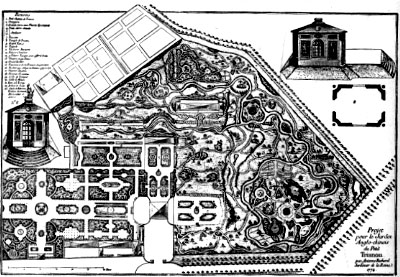
On some days, this journey is direct: one wakes up with a map, an agenda. From A - do laundry- to B - mail books - to C - finish ProjectC. Like in a French garden, paths are direct. Pleasure is a binary condition derived from reaching the destination: the completion of said goals. Days like show wars recognition these are enjoyably crisp and easy to grasp.
Today was not such a day.
Today was the other type of day, like a pleasant meander through an English Garden. Unlike the stricter and more formal French-garden type days, English Gardens days are looser and more open to interpretation. Value judgements arie useless on such days, and one can only capture it as a quality. The following text is a way to express the day's quality and to use it as a thinking machine.
The morning saw Mike Harrison and David Pearson drop into 631 Vernon. I never expected to see David again after San Francisco, but he has been consistently friendly whenever he drops into LA. One appreciates such gestures.
What is a day but a 24 hour journey?
 |
| French Garden: Destination as Journey |
On some days, this journey is direct: one wakes up with a map, an agenda. From A - do laundry- to B - mail books - to C - finish ProjectC. Like in a French garden, paths are direct. Pleasure is a binary condition derived from reaching the destination: the completion of said goals. Days like show wars recognition these are enjoyably crisp and easy to grasp.
Today was not such a day.
 |
| English Landscape Garden: Journey as Destination |
Today was the other type of day, like a pleasant meander through an English Garden. Unlike the stricter and more formal French-garden type days, English Gardens days are looser and more open to interpretation. Value judgements arie useless on such days, and one can only capture it as a quality. The following text is a way to express the day's quality and to use it as a thinking machine.
The morning saw Mike Harrison and David Pearson drop into 631 Vernon. I never expected to see David again after San Francisco, but he has been consistently friendly whenever he drops into LA. One appreciates such gestures.
2011-08-19

2011-08-14
To JM:
Joanna, you cheating rat. You take my bike, never return it (but constantly say you will), and now, you avoid me. What a weasel you are. This tells me you are of small spirit and poor character. I am sad and disappointed that a friend can mistreat the trust given to them. You no longer have my respect or regard in any matters. No good can come from knowing you: you add no joy or smiles but stir anger and bile.
Joanna, you cheating rat. You take my bike, never return it (but constantly say you will), and now, you avoid me. What a weasel you are. This tells me you are of small spirit and poor character. I am sad and disappointed that a friend can mistreat the trust given to them. You no longer have my respect or regard in any matters. No good can come from knowing you: you add no joy or smiles but stir anger and bile.
2011-08-10

A temporary tribe
Deeply thudding beats sonically agitate the ocean of bodies. We pulse like one muscle in spasming twitches. Shaman guides lead us through tight corridors of treble so they might deliver us to echoing caverns of deep sonic space. We raise our hands and caress the viscous, syrupy air, saturated in boysnoise.
We are all drenched in sweat and honey love and smile with toothy ecstacy grins.
The beats taste lumpy in the throat far past the end. It sits in the base of the spine.

2011-08-07

*the object is just the residue
“In traditional philosophy, you have subjects who interact with objects in some way, for example by perceiving them.
For Deleuze and Guattari, being a subject or an object no longer matters; the relationships are primary--hence the rhizome, which is not nodes plus roots but rather just roots. These relationships are related to "flows." Almost anything can be said to flow, but D&G focus on very particular and everyday flows: money, shit, air, milk.
A D&G machine is composed of smaller machines, each of which sits on a flow and interrupts it. Their examples are the anus, the mouth, and so on. Thus a human body is a classic D&G machine.
But every machine is a part of a system of machines, and between them they integrate every sort of flow. Therefore there can never be a starting point and an ending point for a process: the flow is simply transformed through the interruption, it cannot be said to have a "final cause," and any attempt to limit the flow--for instance, portraying desire as something originating with a subject and ending with an object--is a camouflage operation for the actually unlimited flow. The physicality of machines makes it look like there are actually beginnings and endings in the flow, providing us with an illusion of production, consumption, et cetera.
If we see past this property of machines, we can understand that we are never "molecular" or "nomadic" or whatever: we are only "becoming-molecular," which is a state of constant flux that is far from equilibrium.
I think that this relates substantially to the main thrust of Deleuze and Guattari's work, which is the production of a tenable alternative to the power/knowledge world articulated by Foucault.
Foucault believed that knowledge is always a form of power, but he took it a step further and told us that knowledge can be gained from power, producing it, not preventing it. Through observation, new knowledge is produced. In his view, knowledge is forever connected to power, and often wrote them in this way: power/knowledge. Foucault's theory states that knowledge is always a form of power:
Knowledge linked to power, not only assumes the authority of 'the truth' but has the power to make itself true. All knowledge, once applied in the real world, has effects, and in that sense at least, 'becomes true.' Knowledge, once used to regulate the conduct of others, entails constraint, regulation and the disciplining of practice. Thus, 'There is no power relation without the correlative constitution of a field of knowledge, nor any knowledge that does not presuppose and constitute at the same time, power relations (Foucault. Discipline and Punishment, London, Tavistock, 1977, p27.)
For him, power acts as a type of relation between people, a complex form of strategy, with the ability to secretly shape another's behavior. As power/knowledge accumulates, it moves toward a lopsided equilibrium.
Thus, for Foucault, a subject is always created and delimited by the knowledge-power dialectic.
But by describing the subject as a system of machines that function as interruptions allows us to see past this dialectic of control, where there is a beginning and and end, and instead focus on the fluidity of flows: where did it come from/where is it going/what are its mutations along the way”.
(All opinions welcome.)
mashed up and edited from http://ask.metafilter.com/59479/What-is-Deleuze-and-Guattaris-abstract-machine & http://www.moyak.com/papers/michel-foucault-power.html
two-minute rule

Try dealing with stuff immediately.
When encountered with something, make a decision on it immediately
David Allen suggests a two-minute rule: if the task can be done in less than two minutes, do it now. If not, add it to your errand list.
excerpt from http://zenhabits.net/once/
2011-08-03
Thinking Machine: Frankenstein’s Atlantis

“[Alchemists] promised impossibilities and performed nothing.
The modern masters promise very little. They know that metals cannot be transmuted, and that the elixir of life is a chimera.
But these philosophers whose hands seems only made to dabble in dirt have indeed performed miracles. They penetrate into the recesses of nature, and show how she works in her hiding places.” –M.Waldman
The tension between the grand, futile masters of imagination – alchemists who seek “chimeras of boundless worth” – versus the wormy, limited ambition of the modern philosopher is one theme that curries the book Frankenstein by Mary Shelley.
Frankenstein himself, before his modern education, was fed on texts by “Cornelius Agrippa”, a ‘scientific quack’ from a prior period. Through lack of thorough scientific method, C.Agrippa made grandly imaginative inductions on the relationships between causes and effects, which I assume are all wrong in effect but interesting in conclusions and when extrapolated.
Frankenstein’s Creature is the resolution of this opposition: born from grand imagination and realized through the accumulated piecemeal discoveries of the modern sciences.
The creature, realized by the pursuit of 'glory’ – that loosely-defined quality that drives men to new horizons in its insatiable pursuit- desired only the opposite: not the glory of discovery, but a stable companion ‘to go live with in the jungles of South America, never to be seen again’. This part, I am unsure of how to regard.*
Frankenstein’s desired to give human life, yet what he made was more than ‘human’. Held back by the grotesqueness of his creation and the stiffness of the term ‘human’ to fully embrace the glory of it, he wrestled with his desire to create and the inability to accept the fruits of this to his death bed.
“From my infancy I was imbued with high hopes and a lofty ambition; but how am I sunk!” he laments on his death bed to Robert Waldon, the ship’s captain.
Both Victor Frankenstein and Robert Waldon are not petty men: they share grandly expansive and metaphysical world views:
“… did you not call this a glorious expedition? and wherefore was it glorious? Not because the way was smooth and placed as a southern sea, but because it was full of dangers and terror, because at every new incident your fortitude was to be called forth and your courage exhibited… For this it was glorious, for this was it an honorable undertaking…
…And now, behold, with the first imagination of danger you shrink away and are content to be handed down as men who had not strength enough to endure cold and peril.
Oh, be men, or be more than men. Be steady to your purposes and firm as a rock. Return as heros who have fought and conquered, and who know not what it is to turn their backs on the foe.”
Thus, these men are not moored to the meat of their existence, but merely tethered to it. Their Being resides in more ephemeral geographies – like the eternal Atlantis –of fables that drive men to seek wider plains, desire deeper explanations and to learn of wider horizons.
However, in this Atlantis (which never really is there), the search itself becomes the act of its creation. Frankenstein’s creature was not a latent property to be “discovered”. It was willed into being by truth yarns spun together (like the alchemist Cornelius Agrippa) with agile zest and paranoia to create new plateaus to rest the imagination on.
*happiness is only real when shared. -
def ARCHIVE(lennardYear):
title = 'The Whale'
description = 'Notes to Myself / A Thinking Machine'
\"He is currently an LA-based nomad.
 |
| Los Angeles, 2010 |
title = 'The Whale'
description = 'Notes to Myself / A Thinking Machine'
eulogy = """
This is his diary.
He misses Berlin (where he worked for a summer) and is nostalgic about Singapore (his birth city).
summary = [title, description, eulogy]
print (summary)
print ("""
After watching Hackers (aged 10), he wished he was in New York until he got there, where he realized to himself, "oh shit! maybe it was better if i'd left it in my imagination."
Finally, he gave up looking for There as a place. Home is now where-ever he is at that point in time.
What comes first? Truth or beauty. Either way, that gap between fiction and reality is where he plays. "Telling lies with the truth," he adds with a grin.
This is his document, a laboratory, a diary, a voice, a collage. Not about who he was or who he wants to be, but who he is, whatever that may mean or where-ever that may lead.\"
"""
summary = [title, description, eulogy]
print (summary)
print ("""
/
 ___       ___ (___  ___
|    |   )|   )|    |___ \   )
|__  |__/ |    |__   __/  \_/
                           /
""")
return lennard
ARCHIVE (2009-2011)
//----------END CHAPTER-----------
Today Dan came by. He is well on with Life, arranging little games to keep himself busy.
Baking pizza, bread and making meals from the basics is a calming process. It slows and distracts the mind. However, am starting to realize that I need alternative inputs other than computational/textual. If not, the mind gets unbalanced and the personal temperament unpleasant.
//Book Thinking Machine, Frankenstein v1.0:
Frankenstein makes one question the definition of "monster". Is the monster so monstrous? The reader takes the role of the ship captain: at the end, torn between what he witnesses - the monster's wrestle to justify his life - and what he was taught by his visual and historical prejudice: the monster is a monster who must be killed.
His creator also goes through the same turmoil. But the monster is right when he says "you are my creator, but I am your master." Certain men of particular fortitude are drawn to such wild abandon to their disciplines that they lose themselves in it.
Baking pizza, bread and making meals from the basics is a calming process. It slows and distracts the mind. However, am starting to realize that I need alternative inputs other than computational/textual. If not, the mind gets unbalanced and the personal temperament unpleasant.
//Book Thinking Machine, Frankenstein v1.0:
Frankenstein makes one question the definition of "monster". Is the monster so monstrous? The reader takes the role of the ship captain: at the end, torn between what he witnesses - the monster's wrestle to justify his life - and what he was taught by his visual and historical prejudice: the monster is a monster who must be killed.
His creator also goes through the same turmoil. But the monster is right when he says "you are my creator, but I am your master." Certain men of particular fortitude are drawn to such wild abandon to their disciplines that they lose themselves in it.
2011-07-13
"Pigeon Droppings are damaging to our structures because they are acidic and have other compounds that can dissolve especially things like concrete," said Patricia Martinek, the agency's environmental research manager.
With its large quantities of bacteria and highly corrosive uric acid, pigeon excrement is partly responsible for disasters such as this bridge collapse, as well as the damage of concrete and countless historical stone structures.
According to Venice's department of fine arts and historic monuments, pigeons cause the most damage "to plaster and stucco used on the exterior of buildings and the mortar used in restoration work".
2011-07-12
//Artificial Natures
"There is a sense of nature that is historical," said David Gissen in his lecture today at the California College of the Arts. By historical, he means it is constructed. For example, a park, as a version of nature, is a reconstruction of a historical perspective of what nature is.
In essence, (nature != natural). Natural is moot. Everything is artifice. Called the anthropocene epoch, this is an age where we as humans have significant agency in the direction of evolution.
But are we in denial of this? Timothy Morton, a professor of English (Literature/Environment) at UC Davis thinks so. "Right now we're zombies. Nature has been dead for 50 years. We need to celebrate it - only then can our history begin again." Think organic food and recyclable paper bags: all tokens of a retro vision far removed from the reality of our ecology.
This epochal change could be traced to two periods in history: both related to booms in human populations and technological agency. The 1800s and the Industrial Revolution, and more recently, 1945 and the Nuclear Bomb. One examples of this post-nature ecology given by Francoise Roche is hermaphrodite polar bears, the result of mutations that allow then to procreate with their diminished numbers.
The Mars trilogy by Kim Stanley Robinson frames this nicely. Mars, having been colonized by humans, becomes virgin territory that is the arena for ideological battle: do we remake mars in the image of earth (terraforming) by oxygenating the atmosphere and flooding the barren land? Or do we allow a unique culture on mars to evolve, forcing ourselves to live in the confines of oxygen tanks (aeropany)? It assumes we have the agency to do both: one is a fossilized form of culture, in stasis as we knew we liked it. The other as a form of cultural safari.
I am still halfway through the trilogy (Green Book), and so cannot say further. So I will bookmark the end here. Any thoughts?
 |
| The Night is Never Dark in the the Anthropocene Epoch |
In essence, (nature != natural). Natural is moot. Everything is artifice. Called the anthropocene epoch, this is an age where we as humans have significant agency in the direction of evolution.
But are we in denial of this? Timothy Morton, a professor of English (Literature/Environment) at UC Davis thinks so. "Right now we're zombies. Nature has been dead for 50 years. We need to celebrate it - only then can our history begin again." Think organic food and recyclable paper bags: all tokens of a retro vision far removed from the reality of our ecology.
This epochal change could be traced to two periods in history: both related to booms in human populations and technological agency. The 1800s and the Industrial Revolution, and more recently, 1945 and the Nuclear Bomb. One examples of this post-nature ecology given by Francoise Roche is hermaphrodite polar bears, the result of mutations that allow then to procreate with their diminished numbers.
The Mars trilogy by Kim Stanley Robinson frames this nicely. Mars, having been colonized by humans, becomes virgin territory that is the arena for ideological battle: do we remake mars in the image of earth (terraforming) by oxygenating the atmosphere and flooding the barren land? Or do we allow a unique culture on mars to evolve, forcing ourselves to live in the confines of oxygen tanks (aeropany)? It assumes we have the agency to do both: one is a fossilized form of culture, in stasis as we knew we liked it. The other as a form of cultural safari.
2011-07-11
//Personal Performance Review
There are 24 hours in a day.
Usually, I start a discipline schedule at 9am everyday.
Projects keep me occupied dinner.
Usually, I can juggle two extended projects at a time.
This means things like "design X/learn Y" etc.
Sometimes, errands take my time.
Errands are things which do not enrich my life, but allow me to live an enriched life.
If my life is impoverised, then errands are pointless.
The day is structured around 2 meals and exercise.
It is essential that these are done leisurely.
It is when the brain breathes and the body takes over.
At night, I allow my mind to roam freely. Sometimes,
when on overdrive, I work at night too. But that means
dinner is especially languid, and a meal might take till 9pm.
By roaming, I mean watching movies or readings books that help
frame my perspective. These are all in the direction of adventure,
the unknown, nature and exploration, guided by science,
logic and computation. People don't usually factor in.
Typically, I am asleep by 2 and am up by 8.
I try not to be too dogmatic about the hours, as long as there
are 6 hours of sleep tucked into me.
Before 9 is time for exercise or meditation. At other times,
it is used to prioritize the activities of the day and reorder current projects.
These are a bit fuzzy now, and notebooks or physical reminders of WIP may help.
Weekly, activities have been cut back
Saturday afternoon/nights are spent out and about.
Friday nights and Sunday are on the fence. It feels wrong to take both off:
too much wastage.
Perhaps Sundays should be free, but also for errands.
This includes laundry,
cleaning the room,
planning a weekly menu,
sorting out the budget
nd whatever else might be important.
Today, I overslept till 11, killing the morning's potential.The last hour
was spent on reviewing budgets and cooking food for the week. Then,
the afternoon was spent on setting up a system for music. (it is quite elegant)
These are halfway between errands and projects.
They help me refine methods for thinking and living.
I think my biggest sink of productivity are small distractions.
If I want to do more, I need to sleep less, or concentrate more.
Another issue is commitment and targets. Often,
I set out to study or learn something, and it fritters away.
Knowledge sunk into the depths of my brain: floating aimlessly.
I think the knowledge acquired needs more structure. It needs an overriding theme.
From now on,
I think all projects need to have some final deliverable.
Their goals should be angled (at this moment) toward portfolio presentation.
Perhaps it might be useful to start each project with a written statement.
This can be loose, and refined as research progresses.
The arbitrary goal right now is Innovation Design Engineering.
(reevaluate this soon.)
//Current Projects:
_1_ Aesthetic Expression: Matte Painting (on hold)
_2_ Coded Relationships: Arduino (whats the goal?)
_3_ Brain Food: Green Mars (dragging on...)
//Coming Projects:
_1_ Collab w/ Yao (portfolio) [framing an argument, matte painting]
_2_ Collab w/ Jan (thesis extension) [Process Experimentation - boolean families, Rendering, Matte Painting]
_3_ AA Facades: concentrate on Arduino. Do not get into representation or too much into gHopper (foundation) [learn how it works with python]
_4_ Ride the Giraffe. Get image done. (identity) [memory stamp, building a history]
_5_ Surf/Swim (body)
//Coming Errands:
_1_ Print physical portfolio (10 copies)
_2_ Frame an arduino project (blindman'sbluff)
 |
| playing in structured freedom |
There are 24 hours in a day.
Usually, I start a discipline schedule at 9am everyday.
Projects keep me occupied dinner.
Usually, I can juggle two extended projects at a time.
This means things like "design X/learn Y" etc.
Sometimes, errands take my time.
Errands are things which do not enrich my life, but allow me to live an enriched life.
If my life is impoverised, then errands are pointless.
The day is structured around 2 meals and exercise.
It is essential that these are done leisurely.
It is when the brain breathes and the body takes over.
At night, I allow my mind to roam freely. Sometimes,
when on overdrive, I work at night too. But that means
dinner is especially languid, and a meal might take till 9pm.
By roaming, I mean watching movies or readings books that help
frame my perspective. These are all in the direction of adventure,
the unknown, nature and exploration, guided by science,
logic and computation. People don't usually factor in.
Typically, I am asleep by 2 and am up by 8.
I try not to be too dogmatic about the hours, as long as there
are 6 hours of sleep tucked into me.
Before 9 is time for exercise or meditation. At other times,
it is used to prioritize the activities of the day and reorder current projects.
These are a bit fuzzy now, and notebooks or physical reminders of WIP may help.
Weekly, activities have been cut back
Saturday afternoon/nights are spent out and about.
Friday nights and Sunday are on the fence. It feels wrong to take both off:
too much wastage.
Perhaps Sundays should be free, but also for errands.
This includes laundry,
cleaning the room,
planning a weekly menu,
sorting out the budget
nd whatever else might be important.
Today, I overslept till 11, killing the morning's potential.The last hour
was spent on reviewing budgets and cooking food for the week. Then,
the afternoon was spent on setting up a system for music. (it is quite elegant)
These are halfway between errands and projects.
They help me refine methods for thinking and living.
I think my biggest sink of productivity are small distractions.
If I want to do more, I need to sleep less, or concentrate more.
Another issue is commitment and targets. Often,
I set out to study or learn something, and it fritters away.
Knowledge sunk into the depths of my brain: floating aimlessly.
I think the knowledge acquired needs more structure. It needs an overriding theme.
From now on,
I think all projects need to have some final deliverable.
Their goals should be angled (at this moment) toward portfolio presentation.
Perhaps it might be useful to start each project with a written statement.
This can be loose, and refined as research progresses.
The arbitrary goal right now is Innovation Design Engineering.
(reevaluate this soon.)
//Current Projects:
_1_ Aesthetic Expression: Matte Painting (on hold)
_2_ Coded Relationships: Arduino (whats the goal?)
_3_ Brain Food: Green Mars (dragging on...)
//Coming Projects:
_1_ Collab w/ Yao (portfolio) [framing an argument, matte painting]
_2_ Collab w/ Jan (thesis extension) [Process Experimentation - boolean families, Rendering, Matte Painting]
_3_ AA Facades: concentrate on Arduino. Do not get into representation or too much into gHopper (foundation) [learn how it works with python]
_4_ Ride the Giraffe. Get image done. (identity) [memory stamp, building a history]
_5_ Surf/Swim (body)
//Coming Errands:
_1_ Print physical portfolio (10 copies)
_2_ Frame an arduino project (blindman'sbluff)
2011-07-03
//On UV Radiation, or, why is the sun harmful?
UV causes breaks in bacterial DNA, which in turn cause the bacterial SOS response, which stops many cellular activities and up-regulates DNA repair enzymes. If the UV damage is minimal the cells can recover when they enter more friendly environments, but if the damage is significant they will never reproduce again.
Ultraviolet germicidal irradiation (UVGI) is a sterilization method that uses ultraviolet (UV) light at sufficiently short wavelength to break down microorganisms. It is used in a variety of applications, such as food, air and water purification. UV has been a known mutagen at the cellular level for more than one-hundred years.
UV causes breaks in bacterial DNA, which in turn cause the bacterial SOS response, which stops many cellular activities and up-regulates DNA repair enzymes. If the UV damage is minimal the cells can recover when they enter more friendly environments, but if the damage is significant they will never reproduce again.
Ultraviolet germicidal irradiation (UVGI) is a sterilization method that uses ultraviolet (UV) light at sufficiently short wavelength to break down microorganisms. It is used in a variety of applications, such as food, air and water purification. UV has been a known mutagen at the cellular level for more than one-hundred years.
//Differences between Flour Types
Wheat flours contain a protein called gluten which, in the presence of water, forms an elastic network throughout the dough. This is the stuff that gives bread doughs their rubbery consistency. The whole point of kneading bread dough, in fact, is to organize the strands of gluten running through the dough into a strong, resilient, interconnected web. It is this web of protein that will entrap the bubbles of CO2 given off by the yeast as it ferments, enabling the dough to rise. Without the gluten, the CO2 would just bubble up to the surface and be lost.
But flour vary greatly in both the quantity and quality of the gluten they contain because different strains of wheat from different regions and different growing seasons have different gluten profiles. There are times when gluten is not your friend; in a cake batter, excess gluten will create a chewy, coarse-grained cake, and in pastry doughs it will produce a tough pie crust. But for bread you want lots of strong gluten to produce a well-risen and well-shaped loaf. This is why there are special flours for special purposes: cake flour, pastry flour, bread flour, etc.
All-purpose flour is typically a blend of "hard" and "soft" wheats which will perform pretty well in most roles. It usually contains 10-12% gluten. It can be used for bread, but will tend to produce a denser, flatter loaf. Some people will add 1T extra per cup of flour when using all-purpose for bread.
Bread flours have from 12-14 percent protein. They will feel decidedly more elastic while kneading, and will give full, rounded loaves. These flours are made from hard winter wheats from northern states.
Besides the quantity, the quality of the gluten will vary. Some glutens are better at forming the elastic network than others. You can judge this for yourself by making a "gluten ball" from different flours: make a stiff dough using just water and 1/4 c of flour. Knead it until it becomes quite elastic, then continue kneading it between your fingers under a stream of water. This will wash out the starch from the flour and after a few minutes of this you will have a ball of pure gluten. By playing with this ball, stretching and folding it, you will see that some are far more resistant to tearing than others. A good bread flour will enable you to pull the gluten into a thin membrane."
Wheat flours contain a protein called gluten which, in the presence of water, forms an elastic network throughout the dough. This is the stuff that gives bread doughs their rubbery consistency. The whole point of kneading bread dough, in fact, is to organize the strands of gluten running through the dough into a strong, resilient, interconnected web. It is this web of protein that will entrap the bubbles of CO2 given off by the yeast as it ferments, enabling the dough to rise. Without the gluten, the CO2 would just bubble up to the surface and be lost.
But flour vary greatly in both the quantity and quality of the gluten they contain because different strains of wheat from different regions and different growing seasons have different gluten profiles. There are times when gluten is not your friend; in a cake batter, excess gluten will create a chewy, coarse-grained cake, and in pastry doughs it will produce a tough pie crust. But for bread you want lots of strong gluten to produce a well-risen and well-shaped loaf. This is why there are special flours for special purposes: cake flour, pastry flour, bread flour, etc.
All-purpose flour is typically a blend of "hard" and "soft" wheats which will perform pretty well in most roles. It usually contains 10-12% gluten. It can be used for bread, but will tend to produce a denser, flatter loaf. Some people will add 1T extra per cup of flour when using all-purpose for bread.
Bread flours have from 12-14 percent protein. They will feel decidedly more elastic while kneading, and will give full, rounded loaves. These flours are made from hard winter wheats from northern states.
Besides the quantity, the quality of the gluten will vary. Some glutens are better at forming the elastic network than others. You can judge this for yourself by making a "gluten ball" from different flours: make a stiff dough using just water and 1/4 c of flour. Knead it until it becomes quite elastic, then continue kneading it between your fingers under a stream of water. This will wash out the starch from the flour and after a few minutes of this you will have a ball of pure gluten. By playing with this ball, stretching and folding it, you will see that some are far more resistant to tearing than others. A good bread flour will enable you to pull the gluten into a thin membrane."
2011-06-12
//book notes
In 'The Social Animal", David Brooks - author and columnist - takes unrelated studies and relates it to the different chapters of the book: e.g. Morality, Learning, etc. It is, at its most ironic, a categorically rational take on the emerging paradigm of emergence, networks and things working within the unconscious, told through the fictional story of two gen-XYZers growing up and falling in love.

This is a "post-google" book that could only have been possible with the malleability that google has given to information.
These studies vacillate between conclusions from psychological, cultural and physiological disciplines. Using this technique, David Brooks builds up each chapter topic as the subjective web that spins together these unrelated studies to a very pointed argument that evades conclusion. But maybe that is the point of his topic as well.
However, I am suspicious that some of these study-chapter topic relationships might be carefully crafted syllogistic fallacies. But that is also the draw of the book: think of it as a fictional story carefully crafted with data instead of characters. It is neither real, nor fake. It is a different form of fiction, halfway between authorship and observation.
Nonetheless the draw is undeniable and the book reads very convincingly. The use of fictional characters to propel the studies forces empathy within the reader, relaxing skepticism and making it a chewably enjoyable read.
In 'The Social Animal", David Brooks - author and columnist - takes unrelated studies and relates it to the different chapters of the book: e.g. Morality, Learning, etc. It is, at its most ironic, a categorically rational take on the emerging paradigm of emergence, networks and things working within the unconscious, told through the fictional story of two gen-XYZers growing up and falling in love.

This is a "post-google" book that could only have been possible with the malleability that google has given to information.
These studies vacillate between conclusions from psychological, cultural and physiological disciplines. Using this technique, David Brooks builds up each chapter topic as the subjective web that spins together these unrelated studies to a very pointed argument that evades conclusion. But maybe that is the point of his topic as well.
However, I am suspicious that some of these study-chapter topic relationships might be carefully crafted syllogistic fallacies. But that is also the draw of the book: think of it as a fictional story carefully crafted with data instead of characters. It is neither real, nor fake. It is a different form of fiction, halfway between authorship and observation.
Nonetheless the draw is undeniable and the book reads very convincingly. The use of fictional characters to propel the studies forces empathy within the reader, relaxing skepticism and making it a chewably enjoyable read.

2011-06-06
Of Jan Major and other Minor things
Gardening Day started with a lesson in biodiversity over breakfast from Jan Major. Biodiversity, in a nutshell, is about balance and equilibrium. I'd like to think of it as dynamic stasis - a boundary of parameters that allow the most number of processes and products to occur. Too much of one thing collapses the possibility of other thiings occuring. "It will re-establish equilibrium," he says. "But that'll take thousands of years...". (He uses words like "resource management" when describing plants.P)
Correct my ignorant delusions if I am wrong, but perhaps this contributes to what you mean by structures for uncertainty. Too much change in one's lifestyle - which is essentially an ecosystem of social ties, work responsibilities and environments - would upset its dynamic stasis.
I used to be uncomfortable with the idea of stasis: that we don't "progress", and really, we just are. If we don't progress, then why are we alive? What do we strive for? What do you think. Over the past two years, with the help of some excellent professors, I've slowly turned to the idea that progress is a very hegelian idea: by default, it necessitates an absolute ideal, a judgement on what is better/worse. It is a juridical conception of the world: a false absolute. In opposition, I think of gypsies, carnivals and nomads: the maximum number of difference processes in the smallest confines, a multitude of friction between personalitites, or, dynamic stasis. Its a different mode of thinking and living. I'm not sure how to evaluate my day/life in this framework, except to divide it into loose moments (post dinner, where I drift) and intensifications (10am - 10pm, roughly, where I live by strict stucture and goals).
I used to be uncomfortable with the idea of stasis: that we don't "progress", and really, we just are. If we don't progress, then why are we alive? What do we strive for? What do you think. Over the past two years, with the help of some excellent professors, I've slowly turned to the idea that progress is a very hegelian idea: by default, it necessitates an absolute ideal, a judgement on what is better/worse. It is a juridical conception of the world: a false absolute. In opposition, I think of gypsies, carnivals and nomads: the maximum number of difference processes in the smallest confines, a multitude of friction between personalitites, or, dynamic stasis. Its a different mode of thinking and living. I'm not sure how to evaluate my day/life in this framework, except to divide it into loose moments (post dinner, where I drift) and intensifications (10am - 10pm, roughly, where I live by strict stucture and goals).
I like how gardens gain momentum and cadence. They grow even when you're not working on them, and they index the passage of time very explicitly. In our parking-lot/backyard garden, there are snap peas, eight types of tomatoes, corn, rhubarb, strawberries and mint. The watermelons did not survive winter. The tomatoes were doing too well and overcrowding the other plants, so some had to be transplanted to another pot. (Good soil consists of plenty of organic matter and mulch.*)
After gardening, we sat by the firepit in the backyard tiki hut (a bamboo lean-to they made last summer). It was around 8, and the sun had just gone down and the air smelled of the sea. We had Bush Bread, which is a thicker doughier version of bread cooked directly in the ashes of the fire. The bread comes out looking grey and mangey from the ash, but has a smokey rainbow of flavour when you bite into it. (The secret is butter, nuts and fruit bits.*)
Last night, I finished "The Man Who Loved Only Numbers", written by Paul Hoffman about the late mathematician, Paul Erdos. The elegent trick of the book is simple: Hoffman gets you engaged with the neurotic character of Erdos. With this, he sneaks in real theorums and contextualizes them with the different vectors that inform it: the history of some theorums, differences between prime and composites and the personalities behind it (betrand russell, einstein, von newman, fermat, godel all make guest appearances.) In case you never read it, I wanna share some lines and ideas I found enjoyable:
On the Plan for No Plan: "Random methods were effective in routing telephone calls," said Graham, who spent thirty-five years in R&D at AT&T. "... you want to avoid systematic bias. It was better to have no rule and just pick a random link." .
On Critical Paranoia as applied to Maths: "Mathematics is about finding connections, between specific problems and more general results, and between once concept and another seemingly unrelated concept that really is related."
On Structural Delusions: "I have a theory... in so many areas of mathematics, it seems natural of appropriate to create your own mathematical world... It can carry over to the rest of your life. There's a tenency to mae up your own rules. A + B is not equal to B + A. Well, everyone knows it is, but suppose it isn't. Now what have you got? Why should you drive on the right when you can drive on the left?"
And with that last line, we're now full circle. "Perhaps what we need to build are structures for safe uncertainty." It is now 930am on a cloudy Sunday. Good bye.
* = words of Jan Major
* = words of Jan Major
2011-06-05
Roommates of Past and Present
It is my second night in Venice.
Yesterday morning, my roommate, Yao, cried at our final goodbye. I woke up in Dan's apartment and rushed down to see him before he left for work. His reaction shocked me: at both the depth and sincerity of emotion. It made me feel contemplative for a while, considering why he might feel so sad. And strangely, the memories of our times spent together extended way back. Empty days I thought lost were filled with us hanging out- the first time he smoked, me getting drunk, cooking together. The silly stupid stuff. Our chats. Some days he would write and leave messages on my door.At one point, he was dating another girl, Lu, at the time, and she spent a summer living with us. T'was all much ado about nothing, that was also all a part of everything. We had spent so much "nothing" time together that we had grown accustomed and accepting of each other's personal habits. I think that is what I learnt most from Yao: his large emotions, to always support and accept. He was a very generous and patient roommate.
//About the New Roommates:
Lucy cooked indian food for us tonight - chicken curry and rice. The rice was good. I spread it out on the plate like a pancake, and imagined that it might be good if it were cooked to a crisp in this shape and the gravy put over. I think I was subconsciously thinking of Fried Noodles and Hot Gravy. Worked in chats with Jan and Lucy at different times. Lucy has an interesting creative strategy for planning gifts out: a wall of clippings that are re-worked together, over and over. Like a battlemaster's board. Jan is going back to Australia next friday for a few weeks. He showed me pictures of the outback, near where he lived. The desolation of the area is astounding. "Sometimes, I don't hear someone for 5 days," he says casually about his camping trips. I compared the scale of their state park to the island of singapore on googlemaps. We were still significantly smaller. It depressed me and intrigued him.
After dinner we watched The Imaginarium of Doctor Parnassus. Tom, a nordic guy, has a tricked out the living room to become and indoor screening room. His movie selection is pristine: a catalogue so large that makes the sidebar slider look like a pea. All titled with thumbnails and additional information. Beautiful. Tomorrow afternoon will be my first attendance in the Garden Club.
Notes to self
//Work Schedule:
As usual, slower than expected, as usual. Ambition exceeds ability which drags down confidence. Financial issues had to be pushed a day later. Instead, I changed the wheels on the skateboard. I should have stayed on task till the end before switching, however. I doubt that mental break I "thought" I needed was necessary. However, all comments on the portfolio have been made. Having given it time to stew, I was able to cut more fat off of it. In any case, I increased my lunch period to stretch from 12 to 2 because I felt like taking things easier, which Justus and his brother filled today by cooking tacos. Morritz worked a number on the beans and a plate of scrappy leftovers: they almost tasted like a thick chilli stew. I wish I had taken the effort to do some research into cooking with beans prior. My last semester would have been a lot more appetizing.
Morritz has this treasure trove of food knowledge. "All peasant food is delicious... except for XXX" he would say. I try to follow but sometimes lose him because the words he uses brings up too many parallel associations in my mind's eye. I'm not sure if this is good or bad yet. As an experiment, I will try and tune these associations out for the weekend and respond by looking more at his facial expressions.
//Body Notes:
I cycled 12 miles to deliver a book to Bergman for the report we're writing. It felt very freeing to be back on the bike again for such long distances, with a destination and goal in mind. It makes things all very much simpler: the harder one works, the faster one gets there. In the middle of getting there, I didn't notice a pot hole the size of Vietnam on the ground. I braked too late and flipped over the bike. While the bike pirouetted in the air, I managed to launch into a comfortable trajectory to land on my feet without a scratch while the bike clanged behind. Perhaps someone might describe it as "dainty".
Afternoon fitness session was pleasant. Am mentally getting better at running without stopping. I will soon do a complete loop. Next week, I predict. The problem seems to be the journey back: I make up excuses that I am building up to it. Problem is, I think i need a definitive "build up date". My body however, is not reacting to the chinups and pushups. I think I need to change it to daily morning anaerobic exercises, and cardiovascular ones in the evening. Or find an alternative. The tedium of situps and pushups do not appeal to me. It is a pity not to exercise at the beach, however. The breeze is salty fresh and the sun feels lighter on the skin. It smells and feels a lot better, running in Venice than in Downtown.
June 4, 2011. Midnight
2011-06-03
//note to self:
Hellicarandlewis, a new-media duo focused on play, post their source codes on GitHub. Good place to deconstruct examples.
Hellicarandlewis, a new-media duo focused on play, post their source codes on GitHub. Good place to deconstruct examples.
//from CreatorsProject
TechnoMysticism, this is hypnotically beautiful.
http://www.thecreatorsproject.com/blog/a-poetic-digital-theater-performance
TechnoMysticism, this is hypnotically beautiful.
http://www.thecreatorsproject.com/blog/a-poetic-digital-theater-performance
2011-05-30
//Why are some leaves purple?
Typically leaves are green due to the pigment chlorophyll but can be any colour. Leaves are only green because chlorophyll reflects green and blue light while absorbing red. Another pigment known as carotenoids absorb blue but reflect orange and yellow light and a third group of pigments called anthocyanins reflect reds and purples.
It is the various combinations of these three pigments in leaves that determine leaf colour.
Purple leaves are caused by high levels of anthocyanins and chlorophyll in leaves.
(Thank you Quora.)
Typically leaves are green due to the pigment chlorophyll but can be any colour. Leaves are only green because chlorophyll reflects green and blue light while absorbing red. Another pigment known as carotenoids absorb blue but reflect orange and yellow light and a third group of pigments called anthocyanins reflect reds and purples.
It is the various combinations of these three pigments in leaves that determine leaf colour.
Purple leaves are caused by high levels of anthocyanins and chlorophyll in leaves.
(Thank you Quora.)
2011-05-28


2011-05-23
>"How heavy is your heart?"
>>"As heavy as a stone that floats."
Today, thick white clouds muted the bright Los Angeles sun, toning the atmospheric intensity down to a languid lull. It played off nicely against the night prior with Dylan at the Exchange. (note to self: Manda is an awesome chick.)
The Silverlake Jubilee festival played out in this calm. It was filled with beautifully eccentric people. Later on, it was also filled with scenesters. In this crowd, beautiful girls with colourless skin and blister red lips stalked the block with aged boots. Bewitching.
Nattycakes and Lehmen came too. Jonathan looked like a dragqueen: effeminate sunglasses that had a feline-esque silhouette, probably borrowed from his girlfriend, played off curiously with his very manly frame that a picnic-table red shirt emphasized. I smiled when I saw him plodding in from the distance.
As a souvenir to the day, I donated a 1-minute oral story to ConcreteVoices. I tried to tell a trainspotting story, sharing a spot Dan and I discovered while going on practice adventures. It is a space under a bridge by the train tracks. There, a life-guard chair allows one to perch over a wire fence. The LA river backgrounds this. The height of the chair seat makes it feel like a throne, ruling over a kingdom of debris. The oddity of the situation is delicious: a lifeguard chair, abandoned trailers overgrown with plants, hydroponic tubes, giant water bladders and the odd nature that is the LA river. It is an accidental collage that arranged itself unconsciously, waiting to be interpreted.
I think I should have slowed down and elaborated a bit more on the details when telling the story. I fear my rendition may have been too abstract and fall apart as a string of words without conjuring up a feeling for the atmosphere the space creates. Too much mind-clutter.
>>"As heavy as a stone that floats."
 |
| BoxViolet under the Bridge (She Jumps like a Jellybean) |
Today, thick white clouds muted the bright Los Angeles sun, toning the atmospheric intensity down to a languid lull. It played off nicely against the night prior with Dylan at the Exchange. (note to self: Manda is an awesome chick.)
The Silverlake Jubilee festival played out in this calm. It was filled with beautifully eccentric people. Later on, it was also filled with scenesters. In this crowd, beautiful girls with colourless skin and blister red lips stalked the block with aged boots. Bewitching.
Nattycakes and Lehmen came too. Jonathan looked like a dragqueen: effeminate sunglasses that had a feline-esque silhouette, probably borrowed from his girlfriend, played off curiously with his very manly frame that a picnic-table red shirt emphasized. I smiled when I saw him plodding in from the distance.
As a souvenir to the day, I donated a 1-minute oral story to ConcreteVoices. I tried to tell a trainspotting story, sharing a spot Dan and I discovered while going on practice adventures. It is a space under a bridge by the train tracks. There, a life-guard chair allows one to perch over a wire fence. The LA river backgrounds this. The height of the chair seat makes it feel like a throne, ruling over a kingdom of debris. The oddity of the situation is delicious: a lifeguard chair, abandoned trailers overgrown with plants, hydroponic tubes, giant water bladders and the odd nature that is the LA river. It is an accidental collage that arranged itself unconsciously, waiting to be interpreted.
I think I should have slowed down and elaborated a bit more on the details when telling the story. I fear my rendition may have been too abstract and fall apart as a string of words without conjuring up a feeling for the atmosphere the space creates. Too much mind-clutter.
2011-05-18
//5July2007, Inhabiting Celluloid
Like on the set of Raising Arizona, at the 99cent store - crazy old grannies with leather-ed skins to match their purse and dyed barbie doll hair, thin and stringy. At the entrance, conspiracy theorists - smelled before they are seen - crazy eyes and wild hair. They mutter to themselves, throwing indecipherable phrases at everyone, anyone and no-one.
Like on the set of Raising Arizona, at the 99cent store - crazy old grannies with leather-ed skins to match their purse and dyed barbie doll hair, thin and stringy. At the entrance, conspiracy theorists - smelled before they are seen - crazy eyes and wild hair. They mutter to themselves, throwing indecipherable phrases at everyone, anyone and no-one.
2011-05-16
//La Dolce Vita, excerpts
--
Roger Ebert (Chicago Sun-Times)
"once again, everything collapses in an exhausted dawn."
"... The echo chamber. The Mass at dawn. The final desperate orgy. And of course the touching sequence with Marcello's father, a travelling salesman who joins Marcello on a tour of the night. In a club they see a sad-faced clown lead a lonely balloon out with his trumpet. And Marcello's father, filled with the courage of chamgpagne, grows bold with a young woman who owes Marcello a favour - only to leave ill, gray and ashen, again at dawn."
"... there may be no such thing as a sweet life. But it is necessary to find that out for yourself."
--
Philip French (Guardian)
"... La Dolce Vita introduced him (Fellini) to a popular audience far beyond the art house circuit. It also introduced three terms into the English language. The first is 'Felliniesque' as an adjective to describe something quirkily outlandish or bizarre in the style of the director. The second is 'paparazzi', the pejorative term for brazen celebrity-stalking photographers, named after the journalist hero's camera-toting sidekick Paparazzo, which in turn was borrowed from a hotelier in George Gissing's 1901 travel book, By the Ionian Sea. The third, of course, is the title, La Dolce Vita, used ironically thereafter to describe a shallow materialistic lifestyle, though Fellini claimed he'd used it without irony to mean 'the sweetness of life' rather than 'the sweet life'."
"'It's not plot-driven, it's about them wandering around."
--
Stella Papamichael (BBC)
" rather than wallow in cynicism, Fellini's genius is characterised by a zest for life - albeit a tragically insatiable one - as he sprinkles dreamlike snapshots like glitter in the darkness."
"Tragic desperation is underlined, and also tempered, by Fellini's boundless appetite for beauty and passion... Fellini knows: it's the bitter edge that makes life sweeter."
--
Mick LaSalle (SF Chronicle)
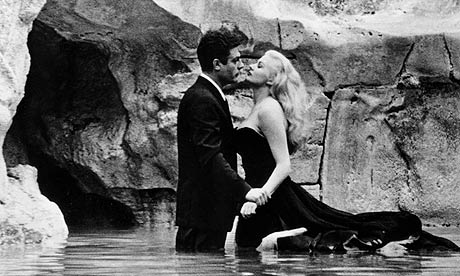
"La Dolce Vita" is always two things at once: It's a wallow in decadence disguised as a moral saga, and it's a moral saga disguised as a wallow in decadence. It's always both, and that tension is always there, within the film and the filmmaker. That's why the scene of Ekberg bathing in the Trevi Fountain has always been such a compelling symbol of the movie as a whole"
"In "La Dolce Vita," Fellini critiques Roman decadence but offers no alternative but boredom; he exposes the frivolity and meaningless of it all, while offering no higher vision.
Accordingly, the film can be seen as an essentially despairing work, but it certainly doesn't feel that way, because the filmmaking is so exuberant. Fellini believes everything that Marcello believes, but he can't be depressed, because he knows something else: He knows he's an artist. "La Dolce Vita" bursts with the excitement of a filmmaker suddenly and completely discovering his power."
 |
| The Sweetness of Life |
Roger Ebert (Chicago Sun-Times)
"once again, everything collapses in an exhausted dawn."
"... The echo chamber. The Mass at dawn. The final desperate orgy. And of course the touching sequence with Marcello's father, a travelling salesman who joins Marcello on a tour of the night. In a club they see a sad-faced clown lead a lonely balloon out with his trumpet. And Marcello's father, filled with the courage of chamgpagne, grows bold with a young woman who owes Marcello a favour - only to leave ill, gray and ashen, again at dawn."
"... there may be no such thing as a sweet life. But it is necessary to find that out for yourself."
--
Philip French (Guardian)
"... La Dolce Vita introduced him (Fellini) to a popular audience far beyond the art house circuit. It also introduced three terms into the English language. The first is 'Felliniesque' as an adjective to describe something quirkily outlandish or bizarre in the style of the director. The second is 'paparazzi', the pejorative term for brazen celebrity-stalking photographers, named after the journalist hero's camera-toting sidekick Paparazzo, which in turn was borrowed from a hotelier in George Gissing's 1901 travel book, By the Ionian Sea. The third, of course, is the title, La Dolce Vita, used ironically thereafter to describe a shallow materialistic lifestyle, though Fellini claimed he'd used it without irony to mean 'the sweetness of life' rather than 'the sweet life'."
"'It's not plot-driven, it's about them wandering around."
--
Stella Papamichael (BBC)
" rather than wallow in cynicism, Fellini's genius is characterised by a zest for life - albeit a tragically insatiable one - as he sprinkles dreamlike snapshots like glitter in the darkness."
"Tragic desperation is underlined, and also tempered, by Fellini's boundless appetite for beauty and passion... Fellini knows: it's the bitter edge that makes life sweeter."
--
Mick LaSalle (SF Chronicle)
"La Dolce Vita" is always two things at once: It's a wallow in decadence disguised as a moral saga, and it's a moral saga disguised as a wallow in decadence. It's always both, and that tension is always there, within the film and the filmmaker. That's why the scene of Ekberg bathing in the Trevi Fountain has always been such a compelling symbol of the movie as a whole"
"In "La Dolce Vita," Fellini critiques Roman decadence but offers no alternative but boredom; he exposes the frivolity and meaningless of it all, while offering no higher vision.
Accordingly, the film can be seen as an essentially despairing work, but it certainly doesn't feel that way, because the filmmaking is so exuberant. Fellini believes everything that Marcello believes, but he can't be depressed, because he knows something else: He knows he's an artist. "La Dolce Vita" bursts with the excitement of a filmmaker suddenly and completely discovering his power."
Subscribe to:
Posts (Atom)